My Approach to Software Development
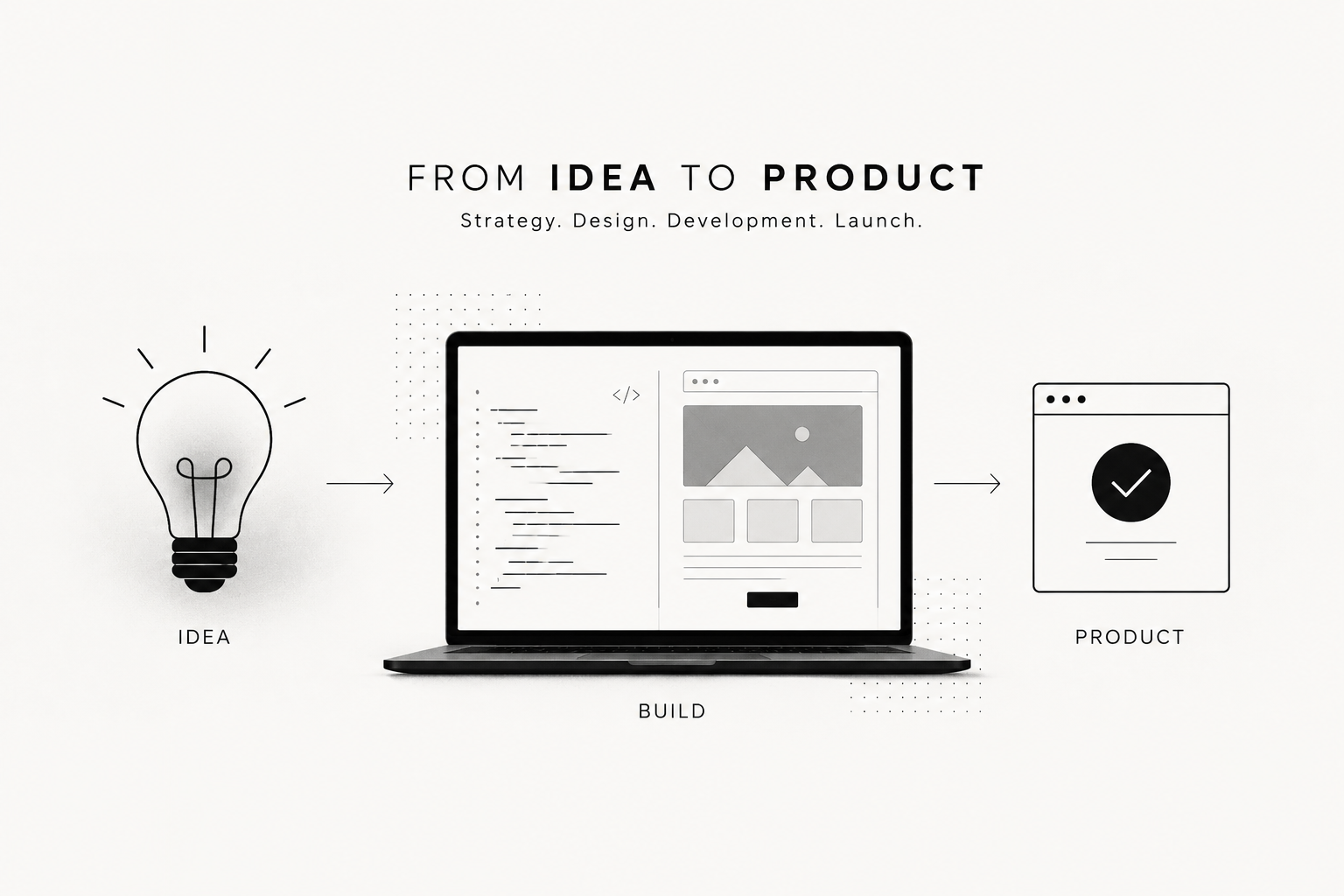
Every software product starts with an idea.
Sometimes it begins with a clear business problem. Sometimes it is a repetitive process that should be automated. Sometimes it is simply a thought: there has to be a better way to do this.
But an idea alone isn’t a product.
The real work is everything that happens between that first thought and the moment someone can open the software, use it naturally, and depend on it.
For me, software development is not simply about writing code. It is about understanding a problem, designing the right system, building it carefully, and continuously improving it based on how people actually use it.
That journey—from idea to product—is the part I find most interesting.
01. Start With the Problem, Not the Technology
One of the easiest mistakes in software development is choosing technology too early.
A new framework appears. An AI service looks interesting. A particular database is popular. Suddenly, the project starts being designed around the technology rather than the problem.
I prefer to begin somewhere else:
What are we actually trying to solve?
Before thinking about frameworks or architecture, I want to understand the people who will use the software, what they currently do, where they lose time, what frustrates them, and what a successful solution would change.
If I am building a CRM, for example, the objective isn’t simply to create a database containing leads.
The real questions are more practical.
How does a lead enter the system? Who needs to see it? What happens when someone calls that lead? How should follow-ups work? What information does the sales team need immediately? Which repetitive actions could happen automatically?
Once those questions become clear, technical decisions become much easier.
02. Turn the Idea Into a System
After understanding the problem, I start thinking about structure.
Most software is really a collection of connected systems.
Users interact with an interface. The interface communicates with application logic. Data needs to be stored and retrieved. Permissions determine who can access what. External services may need to communicate with the application.
A simple idea can quickly become a network of relationships.
This is why planning matters.
Before building too much, I like to understand the major pieces of the product and how they connect.
For a business platform, that might include:
Users → Leads → Tasks → Communication → Activity → Reports
Thinking this way helps prevent the application from becoming a collection of disconnected features.
Instead, each feature becomes part of a larger workflow.
03. Design the Experience Before Adding Complexity
Software can technically work and still be frustrating to use.
A CRM might store every piece of information correctly but require six clicks to perform something the user does fifty times a day.
That is not a database problem.
It is an experience problem.
This is where software development and UI/UX become closely connected.
I try to think about what users need at each moment.
What information deserves immediate visibility?
What can stay hidden until it is needed?
What action will the user probably take next?
Good interfaces reduce decisions.
If someone opens a lead, they shouldn’t have to search through several screens just to find a phone number, status, recent activity, or next task.
The most important information should already be where they expect it.
04. Build the Foundation First
It is tempting to start with the exciting features.
Dashboards. Charts. Animations. AI tools. Advanced automation.
But those features depend on something less glamorous: a reliable foundation.
Authentication needs to work.
Permissions need to make sense.
Data structures need to be organized.
Validation needs to prevent bad information from entering the system.
Errors need to be handled properly.
Core workflows need to remain predictable.
I would rather build a simple system that is reliable than a complicated system that looks impressive but constantly breaks.
Once the foundation is stable, adding sophisticated features becomes significantly easier.
05. Build in Small, Useful Pieces
Large software projects can become overwhelming when everything is treated as one enormous task.
I prefer breaking the product into smaller systems that can be built, tested, and improved independently.
For example, instead of thinking:
“Build a complete CRM.”
I might think:
Create authentication.
Then create lead management.
Then search and filtering.
Then activity history.
Then tasks.
Then communication.
Then reporting.
Then automation.
Each step creates something usable while moving the product toward the larger vision.
This approach also makes problems easier to identify. When something goes wrong, there are fewer moving parts to investigate.
Progress becomes measurable rather than abstract.
06. Data Should Have a Clear Structure
As software grows, data becomes one of its most important foundations.
Poorly structured data creates problems everywhere.
Duplicate information appears. Reports become unreliable. Features become difficult to extend. Developers begin adding exceptions just to keep old functionality working.
Good data architecture makes the application easier to understand.
For example, instead of repeatedly storing slightly different versions of the same information, I think about relationships between records and which system should be responsible for each piece of data.
This becomes especially important when software includes analytics, automation, or AI.
Those systems are only as useful as the information they receive.
Clean data creates better software.
07. Automation Should Remove Friction
One of my favorite areas of software development is automation.
Every business has repetitive work.
Assigning tasks.
Sending reminders.
Updating statuses.
Checking duplicate records.
Creating follow-ups.
Organizing incoming information.
Generating reports.
Individually, these actions might only take a few minutes. Repeated hundreds or thousands of times, they become expensive.
Software gives us the opportunity to remove that friction.
The goal isn’t necessarily to automate everything.
The goal is to identify actions where human attention isn’t adding meaningful value and allow the system to handle them reliably.
That gives people more time for work that actually requires judgment, creativity, communication, or decision-making.
08. AI Should Be Useful, Not Decorative
AI has introduced another interesting layer to modern software development.
But adding an AI button doesn’t automatically make software intelligent.
I think AI becomes valuable when it is connected to a specific problem.
It might help summarize large amounts of information, categorize incoming data, identify patterns, assist with writing, answer questions using internal knowledge, or automate parts of a workflow.
The important part is context.
Instead of asking:
“Where can we add AI?”
I prefer asking:
“Where is someone spending unnecessary time thinking about something the system could help with?”
That usually leads to much more useful implementations.
09. Handle the Situations Nobody Thinks About
The happy path is easy.
A user enters the correct information. The internet connection works. The API responds immediately. The database contains exactly what we expect.
Real software doesn’t operate under perfect conditions.
What happens when someone enters the same lead twice?
What happens when a request fails?
What happens when a user doesn’t have permission?
What happens when required information is missing?
What happens when two people update something at nearly the same time?
These edge cases are where software starts becoming dependable.
A significant part of development isn’t building what should happen.
It is deciding what should happen when something goes wrong.
10. Testing Is Part of Building
I don’t see testing as something that only happens when development is finished.
Every new feature changes the system.
A seemingly small modification can affect something completely unrelated if components share data or logic.
That is why I prefer testing throughout development.
Does the feature work?
Does it still work on smaller screens?
What happens with unusual input?
Does it affect existing functionality?
What happens if the request fails?
What happens when the user refreshes halfway through the process?
Testing these situations early makes development much more predictable.
11. Launch Is Not the Finish Line
There is a moment in every project when the software finally becomes real.
People start using it.
And that is when you begin learning things that planning alone could never reveal.
Users may interact with features differently than expected. A workflow that seemed obvious during development might create confusion. A feature considered important might barely be used, while a small tool becomes essential.
That information is valuable.
Software should evolve from actual usage.
Build → Launch → Observe → Learn → Improve
I see this cycle as part of development rather than something that happens afterward.
A good product is rarely created perfectly in one attempt.
It becomes better through iteration.
12. Good Software Should Feel Simple
There is an interesting contradiction in software development.
The system behind an application can be extremely complicated while the experience presented to the user should feel incredibly simple.
A single button might trigger validation, database operations, external APIs, notifications, activity logs, permissions, and automation.
The user doesn’t need to know any of that.
They clicked the button because they wanted something to happen.
And it happened.
That is the kind of software experience I aim for.
Complexity belongs inside the system—not in front of the user.
What I Focus on When Building Software
Every product is different, but my development approach usually comes back to several principles.
Purpose — Every feature should solve a meaningful problem.
Structure — The application should have a foundation that can grow.
Usability — Common actions should feel obvious and efficient.
Reliability — Users should be able to trust what the software does.
Performance — The system should respond quickly and efficiently.
Automation — Repetitive work should be reduced wherever it makes sense.
Scalability — Today’s solution shouldn’t unnecessarily limit tomorrow’s possibilities.
Maintainability — The code should remain understandable as the product evolves.
Technology matters, but these principles matter more.
From Code to Product
Writing code is only one part of software development.
The larger process involves understanding businesses, translating real-world workflows into systems, making architectural decisions, designing interactions, solving unexpected problems, connecting technologies, testing assumptions, and continuously improving the result.
That’s what makes software development interesting to me.
You aren’t simply telling a computer what to do.
You’re taking something that exists only as an idea and gradually giving it structure.
First, there is a problem.
Then there is a plan.
Then there are interfaces, databases, functions, APIs, and thousands of small decisions.
Eventually, there is a product someone can actually use.
Final Thoughts
The best software doesn’t feel impressive because it contains the most features.
It feels impressive because it understands what the user is trying to accomplish.
It removes unnecessary steps. It organizes complexity. It responds predictably. It saves time. And as requirements change, it has enough structure to evolve with them.
That is my approach to software development:
Understand the problem. Design the system. Build the foundation. Develop thoughtfully. Test constantly. Learn from real use. Keep improving.
An idea is where the process begins.
A useful product is where all those decisions come together.